


For many SMEs, demand planning is one of the most important and most difficult parts of running a profitable business. The challenge is straightforward: businesses need enough inventory to meet customer demand, but not so much that cash becomes trapped in slow-moving stock.
When planning is inaccurate, the results can be costly. Stockouts frustrate customers, excess inventory strains working capital, production schedules become unreliable, and purchasing teams spend too much time reacting to urgent shortages. The good news is that better planning tools, analytics, and technology give SMEs practical options to reduce uncertainty and improve decision-making.
Why Demand Planning Matters for SMEs
Demand planning helps a company estimate future sales so it can make informed decisions about inventory, purchasing, production, staffing, and cash flow. It is not about perfectly predicting the future. Instead, it is about using available information to make better decisions under changing market conditions.
For SMEs, the reason demand planning matters is often financial. Smaller businesses generally have fewer resources than large enterprises, so a mistake in one high-value product category can have an outsized impact. Ordering too early can create excess inventory, while ordering too late can result in missed sales and disappointed customers.
Effective demand planning provides a clearer view of:
- Expected customer demand by product, location, channel, or time period
- Inventory requirements and future replenishment needs
- Purchasing priorities based on supplier lead times
- Production requirements and capacity constraints
- Cash-flow implications of inventory decisions
- Risks created by changing market conditions
The goal is to improve inventory availability while reducing unnecessary inventory investment. That balance can create a strong ROI from better forecasting, replenishment, and planning processes.
The Limits of Spreadsheet Planning
Many SMEs begin with spreadsheets. Spreadsheets are familiar, flexible, and inexpensive, which makes them useful for early-stage inventory planning. However, as a business grows, spreadsheet-based planning often becomes a source of frustration rather than a source of business insights.
A spreadsheet may contain historical sales, stock-on-hand figures, supplier lead times, purchase orders, and sales forecasts. But keeping those details accurate requires ongoing manual effort. Every update creates the possibility of formula errors, version-control issues, duplicate files, and outdated assumptions.
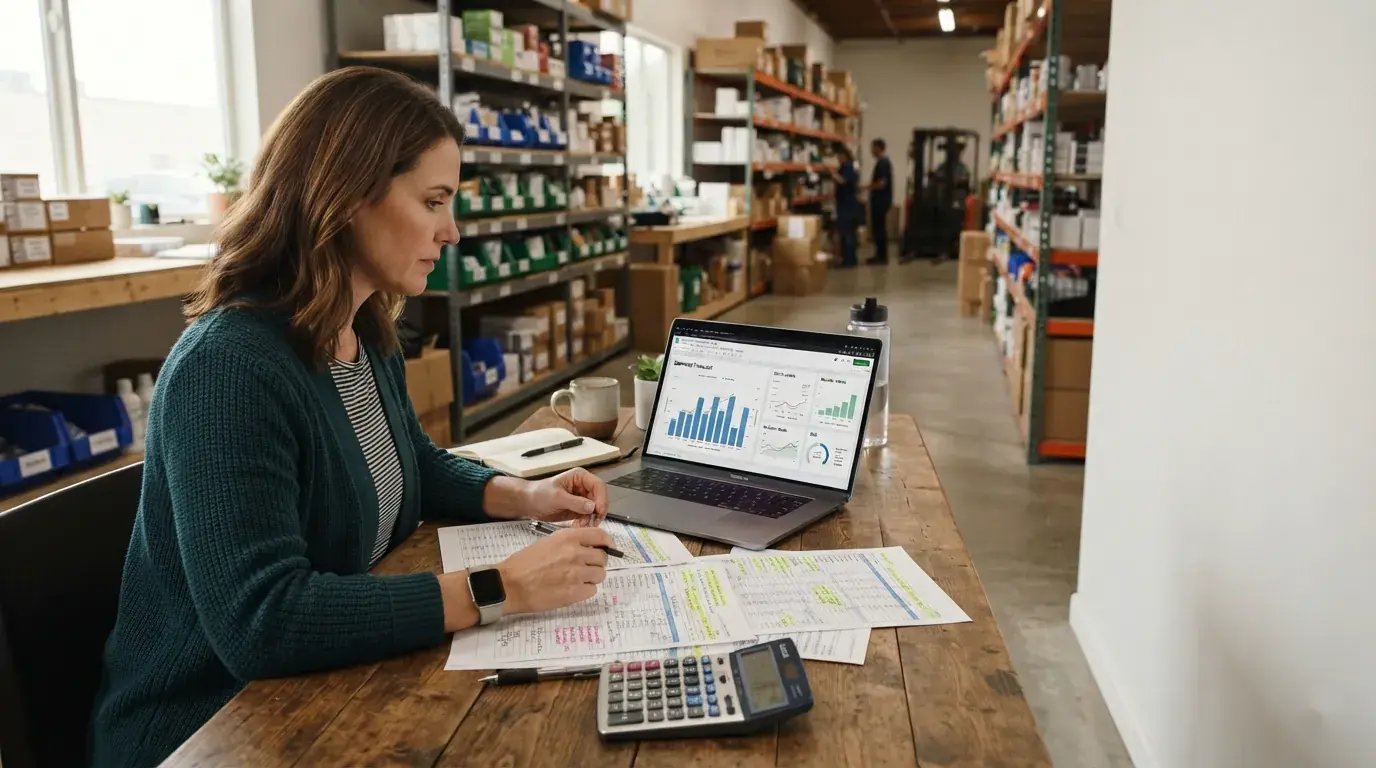
Common spreadsheet planning limitations include:
- Data is often spread across sales, finance, warehouse, purchasing, and production teams
- Manual changes can introduce errors that are difficult to detect
- Forecasts may not automatically reflect new sales orders, stock movements, or supplier delays
- Teams may struggle to share a single version of the plan
- Scenario planning can take hours or days instead of minutes
- Reporting may be backward-looking rather than focused on future inventory risk
- Forecasting logic may be inconsistent across product categories
The result is often a process that teams dread. Instead of using planning data to make confident decisions, managers spend excessive effort reconciling figures and debating which spreadsheet is correct.
From Reactive Planning to Better Insights
Modern demand planning technology helps SMEs move from reactive inventory management to proactive decision-making. Rather than relying on disconnected spreadsheets, businesses can use planning tools that bring sales, inventory, purchasing, and supply-chain data together.
These technologies can analyze historical demand, seasonal trends, product life cycles, supplier lead times, stock availability, and sales orders. The system can then provide recommendations that support more accurate replenishment and purchasing decisions.
For example, a business may discover that a product has stable annual sales but highly seasonal monthly demand. A simple average could suggest ordering the same quantity every month. However, demand planning analytics may identify a predictable peak period and recommend building inventory earlier, taking into account supplier lead times and available warehouse capacity.
This type of business insight can help SMEs avoid two expensive outcomes:
- Running out of fast-moving items during periods of strong demand
- Holding too much slow-moving stock after demand declines
The ability to share a consistent forecast across teams also improves alignment. Sales can contribute information about major customer opportunities, purchasing can flag supplier constraints, and operations can prepare production capacity. This collaborative approach helps ensure the plan reflects real business conditions, not only historical data.
Demand Planning and Supply Chain 4.0
Supply Chain 4.0 describes the increasing use of connected data, automation, analytics, and digital technologies across supply-chain operations. For SMEs, Supply Chain 4.0 does not necessarily mean investing in complex enterprise software or replacing every existing system.
It means applying the right technology to improve visibility, speed, and decision quality.
Useful Supply Chain 4.0 technologies for smaller businesses can include:
- Cloud-based demand planning and inventory forecasting software
- Automated sales and inventory data imports
- Forecasting analytics that identify trends and seasonality
- Replenishment recommendations based on lead times and safety stock
- Alerts for potential stockouts, excess inventory, or delayed orders
- Dashboards that allow teams to share inventory and demand information
- Scenario-planning features that model changes in demand, cost, or supply availability
The value comes from connecting information that already exists. Many SMEs have the data they need, but lack a simple way to turn it into useful actions. Demand planning software can help convert raw data into recommendations about what to buy, what to produce, and when to act.
Choosing the Right Planning Tools
There are many options available, and the best choice depends on the size, complexity, and priorities of the business. A distributor may focus primarily on replenishment and supplier management, while a manufacturer may require stronger production planning and bill-of-materials capabilities.
When comparing planning tools, SMEs should consider the following categories:
| Category | Questions to Ask |
|---|---|
| Forecasting | Can the system forecast demand by SKU, customer, location, and sales channel? |
| Inventory planning | Does it recommend replenishment quantities and order dates? |
| Supply chain visibility | Can it account for supplier lead times, purchase orders, and stock in transit? |
| Production | Can it support production planning, capacity planning, and component availability? |
| Analytics | Does it provide understandable reports, alerts, and business insights? |
| Collaboration | Can sales, purchasing, finance, and operations share a single plan? |
| Integration | Does it connect with accounting, ERP, e-commerce, warehouse, or point-of-sale systems? |
| Usability | Can employees use the system without extensive technical training? |
| ROI | Will the reduction in stockouts, excess inventory, and manual effort justify the investment? |
The right solution should reduce complexity rather than add more work. If a system requires extensive manual maintenance, it may simply recreate the same planning limitations found in spreadsheets.
Measuring ROI From Better Planning
The ROI from demand planning is not limited to lower inventory levels. It can also come from higher product availability, fewer emergency orders, stronger supplier relationships, more reliable production schedules, and less time spent correcting errors.
SMEs can measure the impact of improved demand planning through metrics such as:
- Inventory turnover
- Stockout rate
- Service level or order-fill rate
- Forecast accuracy
- Excess and obsolete inventory
- Emergency freight costs
- Supplier lead-time performance
- Time spent maintaining spreadsheets
- Cash released from unnecessary stock
- Lost-sales reduction
For example, a company that reduces excess stock by 15% may free up cash for marketing, new equipment, additional staff, or growth opportunities. At the same time, better visibility into demand can reduce the risk of shortages that cause customers to buy from competitors.
A demand planning system does not eliminate uncertainty, but it can make uncertainty visible earlier. That gives decision-makers more time and more options.
Calculate your ROI with our free tool

Moving Beyond the Challenge
Demand planning is a challenge for SMEs because the business environment changes quickly. Customers alter buying behavior, suppliers experience delays, production capacity shifts, and market conditions can change with little warning. No forecasting process can remove every risk.
However, businesses do not need perfect forecasts to make better decisions. They need reliable data, practical planning tools, and a process that helps teams act before problems become urgent.
The transition from spreadsheets to connected demand planning technology can reduce manual effort, prevent avoidable errors, and create business insights that support growth. By improving visibility across demand, inventory, purchasing, and production, SMEs can make better use of limited resources and build a more responsive supply chain.
The most effective approach is to begin with the business problem: identify the inventory categories creating the greatest risk, understand the limits of the current planning process, and evaluate options that can deliver measurable ROI. With the right combination of people, processes, analytics, and Supply Chain 4.0 technologies, SMEs can replace reactive inventory decisions with smarter, more confident planning.