

Stock-outs are often one of the most expensive problems in retail businesses.
A customer walks into your store or visits your website, all ready to buy. But the product isn't available. Not only have you lost that sale, but you may have lost the customer altogether.
For retailers, reducing stock-outs isn't about carrying more inventory. It's about carrying the right inventory at the right time.
In this guide, we'll explain why stock-outs happen and the practical steps retailers can take to reduce them.
Why Are Stock-Outs So Costly?
A stock-out affects more than a single missed transaction.
Retailers often experience:
- Lost sales revenue
- Reduced customer loyalty
- Lower customer lifetime value
- Emergency replenishment costs
- Increased staff time spent resolving inventory issues
- Damage to brand reputation
Many retailers respond by ordering more stock "just in case."
Unfortunately, that often creates a new problem of having excess inventory.
More inventories aren’t the solution, it's better inventory planning.
What Causes Stock-Outs?
Understanding the root cause makes them much easier to prevent.
The most common reasons retailers run out of stock include:
1. Poor Demand Forecasting
Many retailers reorder based on intuition or last month's sales.
But demand constantly changes due to:
- Seasonality
- Promotions
- Holidays
- Market trends
- Economic conditions
Without forecasting future demand, stock levels quickly become inaccurate.
2. Ordering Too Late
If suppliers require several weeks to deliver inventory, waiting until shelves are nearly empty usually means products will run out before replenishment arrives.
Lead times should always be included when calculating reorder dates.
3. Manual Inventory Management
Many small retailers still rely on spreadsheets.
While spreadsheets can work initially, they become increasingly difficult to manage as:
- SKUs increase
- Multiple suppliers are added
- Multiple locations are managed
- Seasonal products are introduced
Manual calculations are also far more prone to human error.
4. Inaccurate Inventory Data
If inventory counts are incorrect because of theft, damaged goods, returns, or receiving errors, purchasing decisions become unreliable.
You can't reorder accurately if your stock numbers aren't accurate.
5. Supplier Delays
Even with perfect forecasting, delayed suppliers can create stock-outs.
Maintaining communication with suppliers and monitoring lead time changes helps reduce this risk.
8 Ways Retailers Can Reduce Stock-Outs
1. Forecast Demand Instead of Reacting to Sales
Historical sales data provides valuable insight into future purchasing patterns.
Modern demand forecasting software analyzes:
- Sales history
- Seasonal trends
- Product growth
- Supplier lead times
This allows retailers to purchase inventory before shortages occur rather than reacting after shelves are empty.
2. Set Smart Reorder Points
Instead of ordering inventory when it "feels low," establish reorder points for every SKU.
A good reorder point considers:
- Average daily sales
- Supplier lead time
- Safety stock
This ensures purchase orders are generated before inventory reaches critical levels.
3. Maintain Appropriate Safety Stock
Unexpected demand spikes happen.
Safety stock provides a buffer that protects against:
- Supplier delays
- Sales surges
- Forecasting errors
The right safety stock minimizes stock-outs without tying up unnecessary cash.
4. Improve Inventory Visibility
Retailers should know inventory levels across every location.
Whether you operate:
- Multiple stores
- Warehouses
- Ecommerce channels
Real-time inventory visibility helps prevent products sitting idle in one location while another experiences a stock-out.
5. Review Fast-Moving Products More Frequently
Not every SKU requires the same level of attention.
Focus on:
- High-volume products
- High-margin items
- Seasonal best sellers
Reviewing these products weekly (or even daily during peak seasons) significantly reduces the likelihood of stock-outs.
6. Strengthen Supplier Relationships
Reliable suppliers are critical to inventory performance.
Retailers should:
- Communicate forecasts early
- Share expected demand changes
- Review lead times regularly
- Maintain backup suppliers where possible
Strong supplier relationships often result in more reliable deliveries.
7. Automate Purchase Order Planning
Many stock-outs occur simply because purchase orders are delayed.
Automated replenishment software can recommend exactly:
- What to order
- How much to order
- When to order
This removes much of the guesswork from inventory planning.
8. Use Inventory Forecasting Software
Inventory forecasting software combines sales history, lead times, seasonality, and stock levels to recommend optimal purchasing decisions.
Instead of spending hours updating spreadsheets, retailers receive purchasing recommendations automatically, helping reduce both stock-outs and excess inventory.
How StockTrim Helps Retailers Reduce Stock-Outs
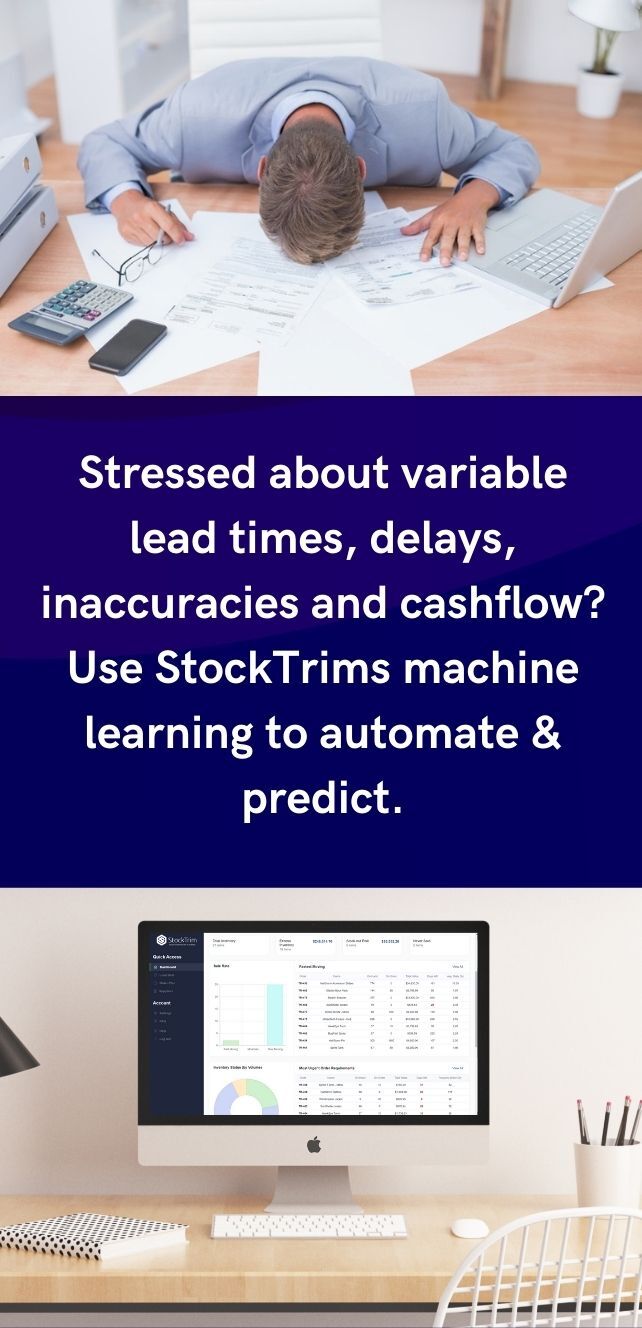
Many small and medium-sized retailers use StockTrim to automate inventory forecasting and replenishment planning.
By integrating with popular inventory management systems, StockTrim analyzes historical sales, supplier lead times, and current stock levels to recommend:
- Which products need reordering
- How much inventory to purchase
- When purchase orders should be placed
- Products at risk of stock-outs
Rather than relying on spreadsheets, retailers receive data-driven recommendations that help improve product availability while avoiding overstocking.
Scientific Sales Managing Director Ivor describes the difference:
"I used to use a monster spreadsheet for my e-commerce stock management. StockTrim makes it much easier and adds algorithms to predict demand based on previous sales. In my first week of using it, it identified a stock-out risk that my spreadsheet missed, allowing me to place an order."
He also noted that adjusting supplier lead times (which had become increasingly important due to shipping delays) takes only minutes with StockTrim instead of hours in Excel.
Frequently Asked Questions
How can retailers reduce stock-outs?
Retailers can reduce stock-outs by improving demand forecasting, setting accurate reorder points, maintaining appropriate safety stock, monitoring supplier lead times, and using automated inventory planning software.
What is the biggest cause of stock-outs?
Poor demand forecasting is one of the most common causes. When retailers underestimate future demand or fail to account for seasonality and supplier lead times, inventory often runs out before replenishment arrives.
Is carrying more inventory the best way to avoid stock-outs?
Not necessarily. Carrying excess inventory increases holding costs and ties up working capital. A better approach is to optimize inventory levels using accurate forecasting and automated replenishment.
Can inventory forecasting software reduce stock-outs?
Yes. Inventory forecasting software helps retailers predict future demand, recommend reorder quantities, and identify products at risk before stock-outs occur.
Conclusion
Stock-outs don't just result in missed sales; they also erode customer trust and force retailers into costly emergency purchasing decisions.
By combining accurate forecasting, better inventory processes, and automated replenishment, retailers can significantly reduce stock-outs while keeping inventory lean.
If you're still relying on spreadsheets, StockTrim offers a 14-day free trial for you to test out with your inventory data before committing to a subscription.