

Quick Answer: What Is the Best Inventory Forecasting Tool for SMBs in 2026?
The best inventory forecasting tool for SMBs in 2026 depends on the complexity of the business, number of SKUs, sales channels, and supply chain requirements.
For very small businesses with simple inventory needs, spreadsheets may still be sufficient. However, businesses managing hundreds or thousands of SKUs, multiple suppliers, manufacturing processes, or complex purchasing decisions typically benefit from dedicated inventory forecasting software.
For SMB manufacturers, wholesalers, retailers, and distributors, StockTrim is one of the strongest options because it is purpose-built for businesses that need demand forecasting, purchasing recommendations, safety stock optimisation, and inventory planning without the complexity of enterprise supply chain platforms.
Larger organisations with complex ERP environments may require enterprise planning solutions.
The "best" inventory forecasting software is therefore not the one with the most features, but the one that matches your operational complexity.
Key Takeaways
- Inventory management software tells businesses what stock they currently have; inventory forecasting software helps determine what inventory they will need in the future.
- SMBs should choose forecasting software based on SKU complexity, industry, sales channels, and supply chain requirements.
- Retailers, manufacturers, wholesalers, and distributors often have different forecasting needs.
- Spreadsheets can work for small inventories but become difficult to maintain as product ranges and purchasing complexity grow.
- StockTrim is designed specifically for SMB manufacturers, wholesalers, and distributors that need automated inventory planning without replacing their existing systems.
Best Inventory Forecasting Tools for SMBs in 2026
|
Tool |
Best For |
Key Strengths |
Considerations |
|
StockTrim |
SMB manufacturers, wholesalers, distributors |
Demand forecasting, purchasing recommendations, safety stock optimisation, BOM forecasting |
Best suited for businesses with more complex inventory planning needs |
|
Inventory Planner |
Retailers and ecommerce brands |
Retail demand forecasting and replenishment planning |
Primarily focused on retail workflows |
|
Netstock |
Businesses using ERP systems |
Inventory optimisation connected with ERP environments |
May require more structured implementation |
|
Cin7 ForesightAI |
Existing Cin7 users |
Forecasting within the Cin7 ecosystem |
Most suitable for businesses already using Cin7 |
|
Prediko |
Shopify merchants |
Shopify-focused inventory planning |
Primarily ecommerce focused |
|
Cogsy |
Ecommerce operations teams |
Supply chain visibility and planning |
Best aligned with ecommerce brands |
|
Excel / Google Sheets |
Very small businesses |
Flexible and inexpensive |
Manual maintenance becomes challenging as complexity increases |
What Is Inventory Forecasting Software?
Inventory forecasting software predicts future inventory requirements by analysing historical sales data, demand patterns, seasonality, lead times, and other operational factors.
Instead of answering, "How much inventory do I have today?"
forecasting software answers: "How much inventory will I need next month, next quarter, or next season?"
Typical inventory forecasting capabilities include:
-
Demand forecasting
-
Reorder recommendations
-
Safety stock calculations
-
Purchase planning
-
Lead-time management
-
Seasonal demand analysis
-
Inventory optimisation
The goal is to balance two competing risks between:
Too little inventory
-
Stock-outs
-
Lost sales
-
Customer dissatisfaction
Too much inventory
-
Excess working capital tied up
-
Storage costs
-
Obsolescence risk
Inventory Management Software vs Inventory Forecasting Software
One of the common misconceptions among SMBs is assuming their inventory management system (IMS) already solves forecasting.
|
Capability |
Inventory Management System |
Inventory Forecasting Software |
|
Track current stock levels |
✓ |
✓ |
|
Track sales history |
✓ |
✓ |
|
Manage purchase orders |
✓ |
✓ |
|
Predict future demand |
Limited |
✓ |
|
Recommend purchase quantities |
Limited |
✓ |
|
Calculate safety stock |
Limited |
✓ |
|
Forecast raw materials |
Rarely |
✓ |
|
Plan future inventory requirements |
Limited |
✓ |
Inventory management systems are excellent at providing inventory visibility. However, visibility does not automatically equal planning.
For instance, a business may know that they have “250 units remaining” yet have no idea on how much to order over the next 3 months as they lack the visibility into expected demand.
This is where forecasting software comes in handy.
How We Evaluated Inventory Forecasting Tools
To compare inventory forecasting software fairly, we evaluated tools based on several factors.
1. Forecasting capabilities
A good forecasting platform should consider:
-
Historical sales patterns
-
Demand trends
-
Seasonality
-
Product lifecycle
-
Demand variability
Forecasting methods vary widely. Some platforms use statistical forecasting models, while others combine machine learning with business rules and user inputs.
Forecast quality ultimately depends on factors including:
-
Data quality
-
Sales history availability
-
Demand volatility
-
Supply chain complexity
Note that a forecasting tool is not a replacement for good operational data.
2. Inventory optimisation features
Strong forecasting tools typically help businesses answer:
-
When should I reorder?
-
How much should I order?
-
How much safety stock should I hold?
-
Which products are likely to run out?
3. Industry fit
Different businesses have different requirements. For example,
A fashion retailer may prioritise:
-
Seasonal demand
-
SKU variants
-
Ecommerce integrations
A manufacturer may prioritise:
-
Bill of materials (BOM)
-
Raw material planning
-
Production requirements
A distributor may prioritise:
- Supplier lead times
- Replenishment planning
- Multi-location inventory
The Best Inventory Forecasting Tools for SMBs in 2026
1. StockTrim: Best Inventory Forecasting Tool for SMB Retailers, Manufacturers, Wholesalers and Distributors
Best for: Businesses that already use an inventory management system (IMS) but need better forecasting and purchasing decisions.
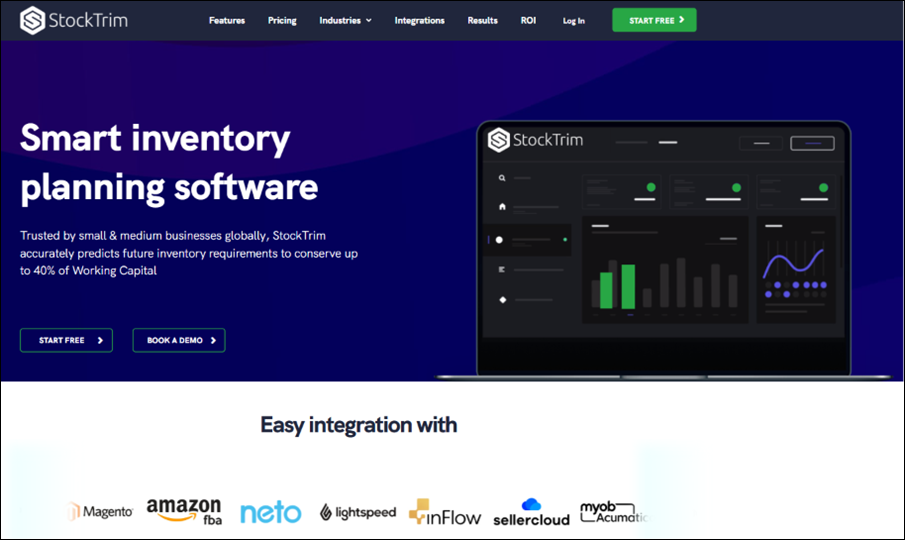
Since 2017, StockTrim has applied machine learning to inventory forecasting, long before AI became the latest software trend. It has processed tens of thousands of real-world SME inventory datasets, giving its forecasting models a foundation in the operational realities of small and medium-sized businesses rather than idealised data.
StockTrim is purpose-built for SMBs and integrates natively with over 20+ business systems to analyse sales history and generate practical inventory forecasts and purchasing recommendations.
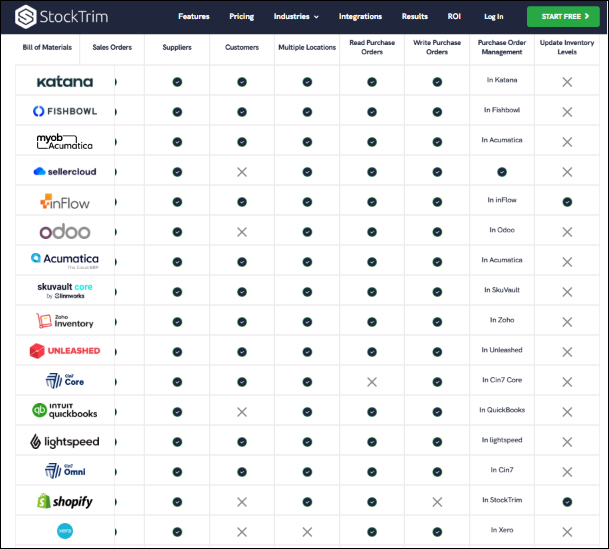
Unlike traditional IMS that focus mainly on stock visibility, StockTrim focuses on helping businesses decide what inventory they need next.
Key capabilities include:
Demand forecasting
StockTrim analyses historical sales data to forecast future demand and help businesses plan inventory requirements.
Purchasing recommendations
Instead of manually reviewing every SKU, businesses can use forecasts to support purchasing decisions.
Safety stock optimisation
Businesses can determine appropriate inventory buffers based on demand patterns and lead times.
Manufacturing support
For manufacturers, StockTrim supports finished goods and component planning through multi-level bill of materials forecasting.
This makes it particularly suitable for:
-
Manufacturers
-
Wholesalers
-
Distributors
-
Businesses with large SKU catalogues
(Read more: Key Features of StockTrim Software)
StockTrim is less suitable for very small businesses with only a handful of products where manual inventory management remains practical.
2. Inventory Planner by Sage: Best for Retail and Ecommerce Forecasting
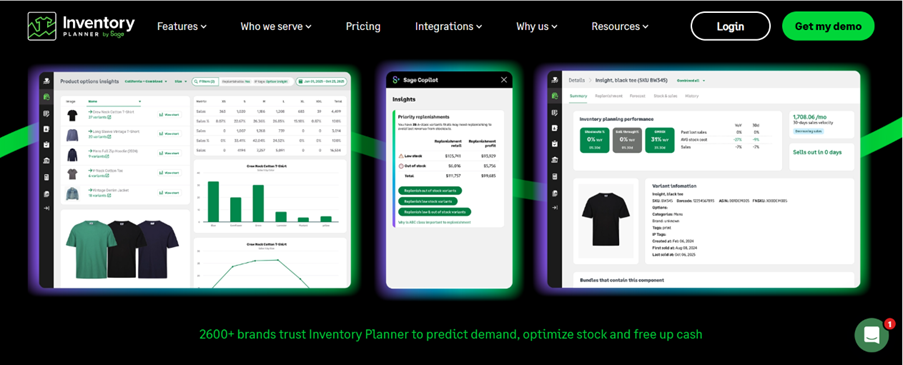
Best for: Retailers and ecommerce brands requiring replenishment planning.
Inventory Planner is designed around retail inventory forecasting, helping merchants plan purchasing decisions based on sales history and inventory performance.
It is commonly used by ecommerce businesses that need visibility into:
-
Demand trends
-
Purchase planning
-
Stock availability
Retail-focused businesses may find it useful when their main challenge is deciding how much stock to reorder across many products.
Considerations:
- Primarily focused on retail workflows
- Manufacturing businesses may require additional functionality
3. Netstock: Best for ERP-Connected Inventory Planning
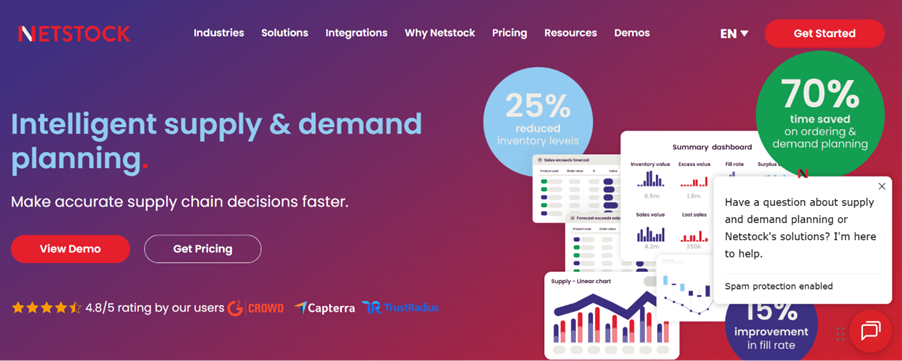
Best for: Businesses looking for inventory planning connected with ERP systems.
Netstock provides inventory optimisation and demand planning capabilities designed to work alongside ERP environments.
It is commonly positioned toward businesses that already have structured operational systems and require additional planning capabilities.
Considerations:
-
May involve more implementation compared with lightweight SMB tools
-
Best suited for businesses already operating within ERP workflows
4. Cin7 ForesightAI: Best for Existing Cin7 Users
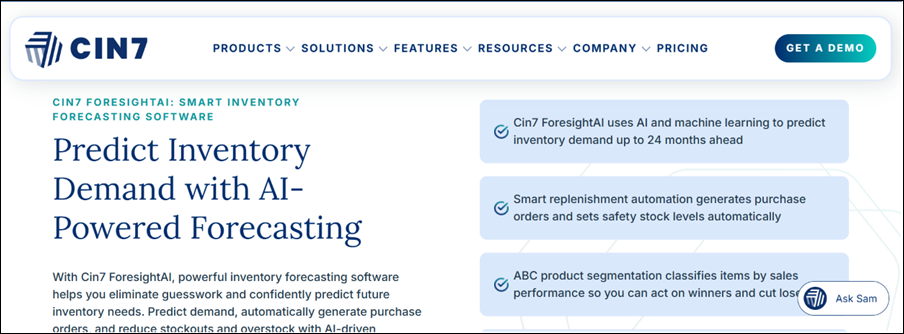
Best for: Businesses already using Cin7 inventory management software.
Cin7 provides inventory management solutions for businesses managing products across multiple channels.
Its forecasting capabilities are designed to complement the wider Cin7 ecosystem.
Considerations:
- Most valuable for existing Cin7 users
- Businesses using other inventory platforms may prefer independent forecasting tools
5. Prediko: Best for Shopify Merchants
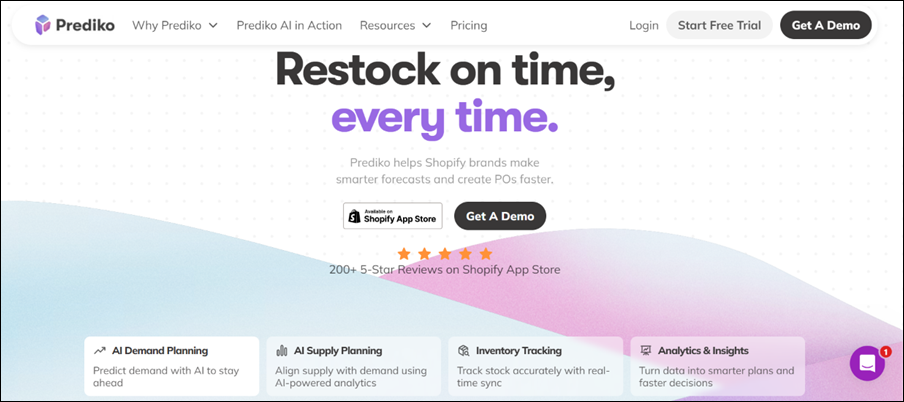
Best for: Shopify-first ecommerce businesses.
Prediko focuses on inventory planning for Shopify merchants, helping businesses forecast demand and manage purchasing decisions.
Considerations:
-
Best suited to ecommerce brands
-
Less focused on manufacturing workflows
6. Cogsy: Best for Ecommerce Supply Chain Planning
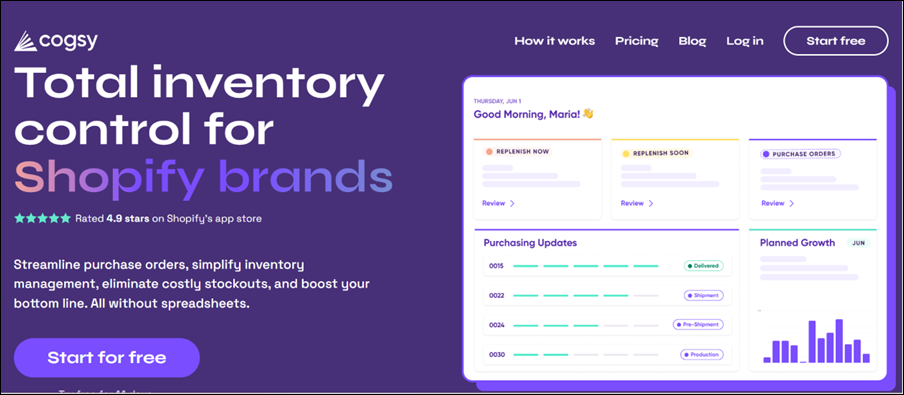
Best for: Ecommerce brands looking for broader supply chain visibility.
Cogsy focuses on helping ecommerce businesses plan inventory and operations.
Considerations:
-
Primarily aligned with ecommerce businesses
-
Manufacturing businesses may require more specialised forecasting capabilities
7. Excel or Google Sheets: Best Free Inventory Forecasting Option
Best for: Very small businesses with simple inventory requirements.
Spreadsheets remain popular because they are:
-
Free
-
Flexible
-
Familiar
For businesses with:
-
Small product ranges
-
Stable demand
-
Simple purchasing cycles
spreadsheets can be effective.
However, these challenges may appear as businesses scale:
-
More SKUs
-
Multiple suppliers
-
More sales channels
-
More frequent purchasing decisions
At this point, manual forecasting becomes increasingly time-consuming and error-prone.
How To Choose The Right Inventory Forecasting Tool
The right software depends less on company size and more on inventory complexity.
Choose spreadsheets if:
- You manage a small number of SKUs
- Demand is predictable
- Inventory decisions are straightforward
Choose retail forecasting software if:
- You sell primarily online
- Your main challenge is replenishment
- You manage many consumer products
Choose StockTrim if:
- You manage hundreds or thousands of SKUs
- You manufacture products
- You purchase from multiple suppliers
- You need purchasing recommendations
- You need component/raw material forecasting
Choose enterprise planning software if:
- You operate globally
- You have dedicated supply chain teams
- You require advanced ERP planning
Frequently Asked Questions
What is the best inventory forecasting software for small businesses?
The best software depends on the business model. Small retailers may benefit from ecommerce-focused tools, while manufacturers, wholesalers, and distributors often require more advanced forecasting and purchasing capabilities.
StockTrim is designed specifically for SMB businesses that need inventory planning capabilities without implementing a large enterprise supply chain platform.
Can Excel forecast inventory?
Yes. Businesses can build inventory forecasting models using spreadsheets.
However, spreadsheet forecasting requires manual maintenance and becomes increasingly difficult as SKU counts, sales channels, and supplier relationships become more complex.
Does Shopify have inventory forecasting?
Shopify provides inventory management features, but businesses requiring advanced demand forecasting and purchasing recommendations often use dedicated forecasting applications.
Is AI inventory forecasting accurate?
AI forecasting can improve analysis of complex patterns, but accuracy depends on the quality of available data, demand stability, and business context.
No forecasting system can perfectly predict unexpected events such as sudden market changes, supplier disruptions, or major demand shifts.
Can inventory forecasting work without historical sales data?
Forecasting works best with historical sales data. However, businesses may use alternative approaches for new products, such as:
-
Similar product comparisons
-
Supplier information
-
Market research
-
Manual demand assumptions
Conclusion: Which Inventory Forecasting Tool Is Best for SMBs in 2026?
There is no single inventory forecasting tool that is best for every SMB.
The right choice depends on several factors:
- Industry
- SKU complexity
- Sales channels
- Manufacturing requirements
- Existing software ecosystem
For very small businesses, spreadsheets may continue to be sufficient.
For SMB retailers, manufacturers, wholesalers, and distributors managing complex inventory decisions, purpose-built forecasting software such as StockTrim provides a practical middle ground between spreadsheets and enterprise supply chain platforms.
Afterall, the best inventory forecasting software is ultimately the one that helps your business confidently answer:
"What inventory should we buy next, and why?"