

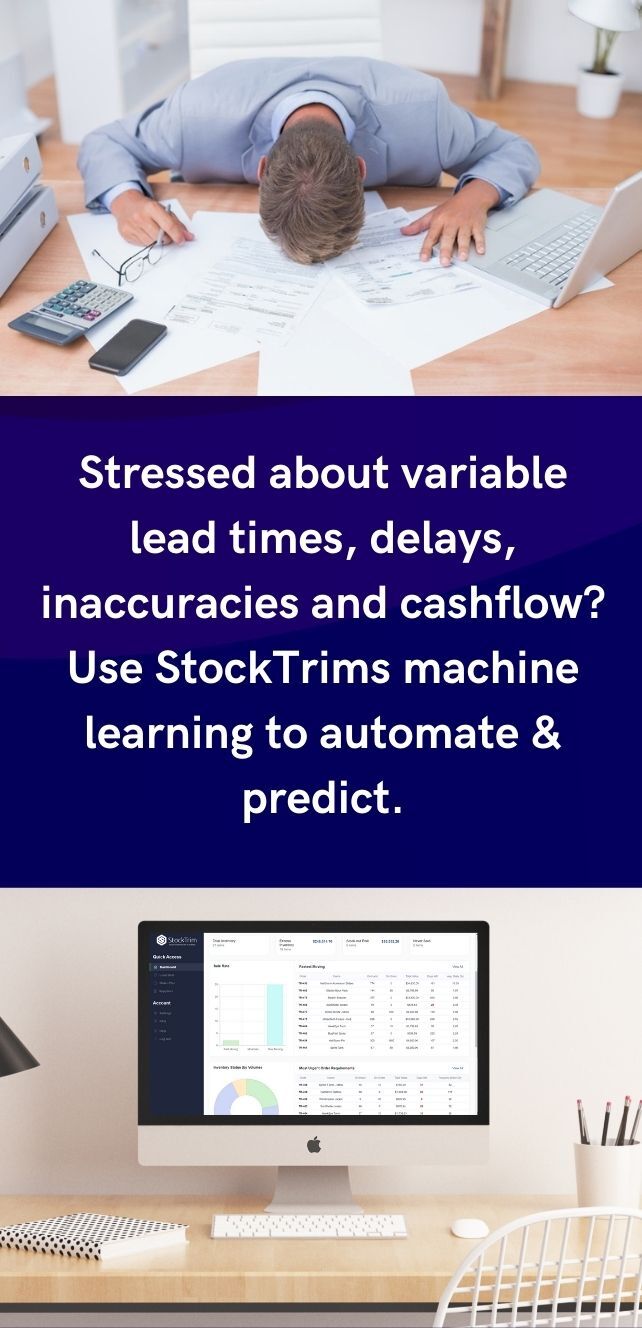
Most people ask me about this kind of software the same way they'd ask about a diet plan: they want the one trick that fixes everything. There isn't one. What there is, is a much smaller, much more boring truth: if you can see your sales history clearly and let a system do the math on it, you stop guessing. That's the whole job. Everything else is detail.
I get asked, more than almost anything else, whether a small team really needs a dedicated system for this or whether a well-built spreadsheet can still hold up. The honest answer depends entirely on how many moving parts you're tracking. A single warehouse with a stable supplier base can probably survive on a spreadsheet for a while longer. Add a second warehouse, a handful of new suppliers, or a product line that swings hard with the seasons, and the spreadsheet stops being a time-saver and starts being a liability nobody notices until an order gets missed. If you've ever had your master spreadsheet turn into the one file everyone's afraid to touch because a broken formula could take the whole thing down, you already know exactly what I mean.
Quick answer: Inventory forecasting software uses your past sales and stock data to predict what you'll need to reorder, and when, so you're not relying on gut feel or a spreadsheet full of manual formulas. Good tools also factor in lead times and seasonality, which is where most manual processes fall apart.

Here's my hot take: most businesses don't have a forecasting problem, they have a visibility problem. They're forecasting fine in their heads, they just can't act on it fast enough because the information is scattered across three systems and one person's memory.
Take one of our long-time customers, a New Zealand distributor of men's grooming products that imports around 1,000 SKUs by sea, which means long lead times and very little room for error. Their warehouse system could technically forecast, but the company's director described it as "a bit of a black box," he couldn't see the reasoning behind the numbers it spat out, so he didn't trust it. He trialed StockTrim for a single day and decided to switch. A year later, the general manager had taken over stock ordering entirely, which freed the director up to focus on the business instead of babysitting purchase orders. That's not a dramatic transformation story. It's just what happens when the black box becomes a glass box.
Why Spreadsheets Stop Working
A spreadsheet works fine when you've got 50 SKUs and one warehouse. It falls apart at scale because reorder math involves more variables than a single formula can juggle cleanly: lead time variability, seasonal spikes, minimum order quantities, safety stock, and the fact that your best-selling item last quarter might be dead stock this quarter. This kind of software isn't magic, it's just built to hold all those variables at once and recalculate them every time new sales data comes in.
There's also a people problem that spreadsheets create without anyone intending it. When one person builds and maintains the formulas, that person becomes a single point of failure. If the director in that story had stayed the only one who understood the old system's black box logic, the general manager couldn't have taken over ordering the way she did. A system built for handoff, where the logic is visible rather than buried in someone's personal formula habits, is what actually lets a business grow past its founder's personal bandwidth.
The businesses that get the most value out of a dedicated inventory planning platform are the ones that were already drowning in complexity before they adopted it. If you've got fewer than 20 SKUs and one supplier, you probably don't need it yet. If you've got hundreds of SKUs, multiple suppliers, and lead times that vary by weeks, you're already paying a hidden tax in overstock and stockouts, whether you've noticed it or not.
What Good Forecasting Software Actually Does
It pulls in your historical sales, looks for patterns (seasonality, trend, one-off spikes you'd want to exclude), and turns that into a recommended order quantity and timing for every single item you stock. The best systems let you see and adjust the logic, not just accept a number with no explanation. That transparency matters more than people expect. The issue with that old black-box system wasn't that the numbers were wrong, it was that there was no way to check.

Something I'll say plainly, because I think it needs saying: a lot of "AI-powered" forecasting tools on the market today are dressing up basic statistical models in flashy language. The actual math behind good demand forecasting hasn't changed much in years, what's changed is how accessible and usable it's become for a business that doesn't have a data science team.
Good inventory forecasting software should also connect to whatever accounting or inventory system you already run, whether that's Cin7, Unleashed, Xero, or QuickBooks. If a tool asks you to re-enter your sales data by hand, that's a red flag, not a feature.
Getting Started Without Overhauling Everything
You don't need to rip out your existing systems to try this. Most inventory forecasting software connects to what you already have and layers the planning intelligence on top. Start with your top 20% of SKUs by revenue, since that's usually where 80% of your cash is tied up anyway. Watch what the software recommends for a month or two before fully trusting it with your full catalogue. Our guide to the 10 must-have features is a useful checklist if you're comparing options.
FAQ
Is inventory forecasting software worth it for a small business?
If you're managing more than a couple dozen SKUs with variable lead times, yes. The time savings alone (that distributor's team went from constant manual guesswork to a system that just runs) usually pays for the software within the first few months. You can check out our ROI tool to see how much StockTrim will cost you and how many days that cost is reimbursed to you through savings.
How is this different from what's built into my accounting software?
Basic accounting and inventory tools track what you have. Forecasting software predicts what you'll need, factoring in lead times, seasonality, and demand trends your accounting system was never built to model.
Does it replace the need for a human to make ordering decisions?
No, and it shouldn't. Think of it as a very fast, very consistent analyst that hands you a recommendation and drafts the order for you to review, not one that spends money on its own. You still make the call, especially on new products or unusual situations the system hasn't seen before.
What if my current sales and stock data is a mess?
Start anyway. Good forecasting software is built to work with the data you already have, warts and all, rather than requiring a separate cleanup project before you can begin.
If you're still building purchase orders from memory or a spreadsheet that only one person understands, that's the actual risk in your business, not the software cost. Start by identifying your top revenue-driving SKUs, get a forecasting tool to model just those, and see how much time and overstock you save before you commit to anything bigger.