

I've noticed something odd in retail: the businesses most resistant to demand forecasting software are usually the ones who need it most. They've been doing it manually for years, they're good at it, and switching feels like admitting the old way wasn't good enough. It's not about that at all. It's about the fact that a person can only hold so many SKUs and store locations in their head at once, no matter how experienced they are.
Quick answer: Retail demand forecasting software analyzes historical sales across your stores or channels to predict future demand for each product, so you can replenish stock at the right time and in the right quantity, without a buyer manually reviewing every line item.
Something I believe strongly, even though it goes against how most retailers operate: the biggest source of stockouts isn't bad luck or unpredictable customers. It's simply that one person or a small team is manually managing far more SKU-location combinations than a human can track accurately, and errors compound the more locations you add.
The inventory manager at an Australian outdoor lifestyle distributor we work with lived this firsthand. She started out on the customer service team fielding constant calls about products being out of stock, before moving into the role responsible for keeping multiple warehouses stocked across a business that's been running for decades and now sells into dozens of countries. Rather than switching everything over at once, her team took a measured approach: they kept calculating orders manually for the company's home brands while letting StockTrim handle the distributor brands, so she and the board could compare both side by side. That comparison is what built real trust in the software, not a sales pitch.
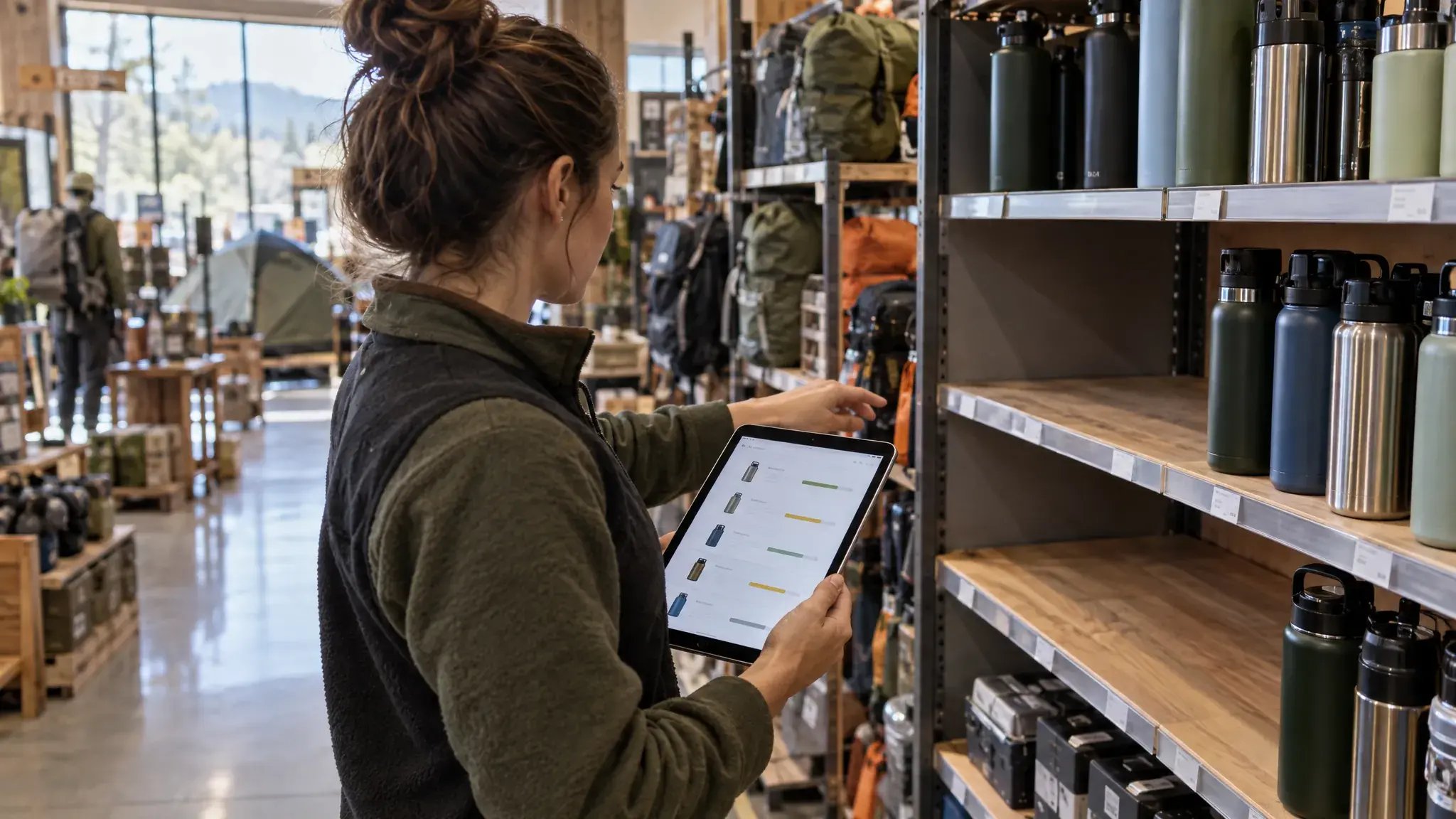
It's worth sitting with how her role changed shape over time. She went from fielding complaints about empty shelves to being the person responsible for making sure those shelves stayed stocked across an entire multi-warehouse operation. That's the kind of career arc that happens naturally when someone closest to the problem ends up owning the fix, and it's also a reminder that the person who feels a stockout most directly is often the one best placed to judge whether a new system is actually working.
Why Multi-Location Retail Breaks Manual Forecasting
A single store is manageable by hand. Add a second location and the math doesn't just double, it compounds, because different stores sell different mixes at different rates, and a citywide promotion might spike demand at one location while barely moving another. Retail demand forecasting software handles this by forecasting at the store level or channel level, not just aggregating everything into one blended number that looks fine on paper but is wrong for every individual location. If you're currently trying to balance stock across two, three, or more locations by eyeballing spreadsheets, the logistical headache you're feeling is real, and it only gets worse as you add locations, not better. Our guide on reducing stock-outs for retailers covers this in more depth.
Retailers also deal with something distributors and manufacturers don't always face as sharply: fast-moving trend cycles. A product can go from a top seller to dead stock in a matter of weeks. Software that only looks at long-term averages will always be a step behind. What that inventory manager needed, and what any retail forecasting tool needs to deliver, is a system that reacts to recent sales patterns quickly enough to matter.
Building Trust in the Numbers
This is where I think a lot of software vendors get the sales pitch wrong. They promise the tool will be right immediately and ask retailers to hand over full control from day one. That's not realistic, and it's not how that team approached it either. The smarter path is running the software alongside your existing process for a stretch, comparing outputs, and only expanding its role once you've seen it perform. Trust in a forecasting tool should be earned through evidence, not assumed because the sales page said "accurate." If handing over the steering wheel on purchasing feels risky to you, that instinct is reasonable, and a good inventory planning system will let you approve every order rather than asking you to fully automate anything before you're ready.
The practical upside once that trust is built is significant. She described the workflow as straightforward: upload sales data and stock on hand, and within a few minutes the system tells you what's running low and what to reorder. That's not a complicated pitch, but it removes the specific kind of human error that creeps in when someone is manually cross-referencing spreadsheets across multiple warehouses under time pressure.

What Good Retail Forecasting Software Should Include
Look for store-level or channel-level forecasting rather than one blended number. Look for a system that updates quickly as new sales data comes in, since retail trends move fast. And look for transparency in how recommendations are generated, so your team can sanity-check the numbers the way that team did, rather than being asked to trust a black box.
FAQ
Does retail demand forecasting software work for multi-location businesses?
Yes, and this is where it delivers the most value. Forecasting at the individual store or channel level solves problems that a single blended average simply can't catch.
How long does it take to trust the forecasts?
Most retailers benefit from running the software alongside their existing process for a few weeks to a couple of months, comparing results before fully handing over control.
Can I use it for only part of my product range at first?
Yes. Running it on distributor or newer product lines first, while keeping manual control of established core lines, is a reasonable way to build confidence before expanding.
Will I lose control over purchasing decisions once I start using it?
No. Good software drafts recommendations for you to review and approve. It's built to remove guesswork, not to take the decision out of your hands.
The Takeaway
If out-of-stock calls are landing on your customer service team's desk the way they once did for that distributor, that's a signal your current forecasting process has hit its ceiling. Start by running retail demand forecasting software on one segment of your catalogue, compare it against what you're doing manually, and let the results make the case for expanding it.